

How to Check Electric Unicycle Tyre Pressure Step by Step
Last Updated: November 1, 2026
Quick Summary
To check electric unicycle tyre pressure, measure the tyre cold on level, hard ground, using the same gauge each time. Press the gauge straight onto the valve, note the reading, and compare it with the range in your manual. Inflate in short bursts if the tyre reads low.
- Measure only after the wheel has sat for at least an hour, ideally overnight.
- Use the manufacturer's recommended range for your wheel model and rider weight.
- Adjust pressure in small steps, usually 2 to 3 PSI at a time.
- Check the sidewall for cuts or bulges before taking a reading.
- Log each reading with the date and temperature to spot slow leaks.
Table of Contents
- Why Electric Unicycle Tyre Pressure Matters
- What You Need Before You Start Checking Pressure
- Finding the Right EUC Tyre Pressure by Rider Weight
- Checking Tyre Pressure Step by Step
- How to Inflate an Electric Unicycle Tyre
- Electric Unicycle Tyre Pressure in PSI and Bar
- Troubleshooting Low Pressure and Leaks
- Building a Pressure Check Routine for Your EUC
- Frequently Asked Questions
Why Electric Unicycle Tyre Pressure Matters
Tyre pressure is one of the simplest things you can check on an electric unicycle, and one of the easiest to forget. A rider may notice the wheel feels sluggish or wobbly, and low tyre pressure is a common cause. A quick check can help rule it out.
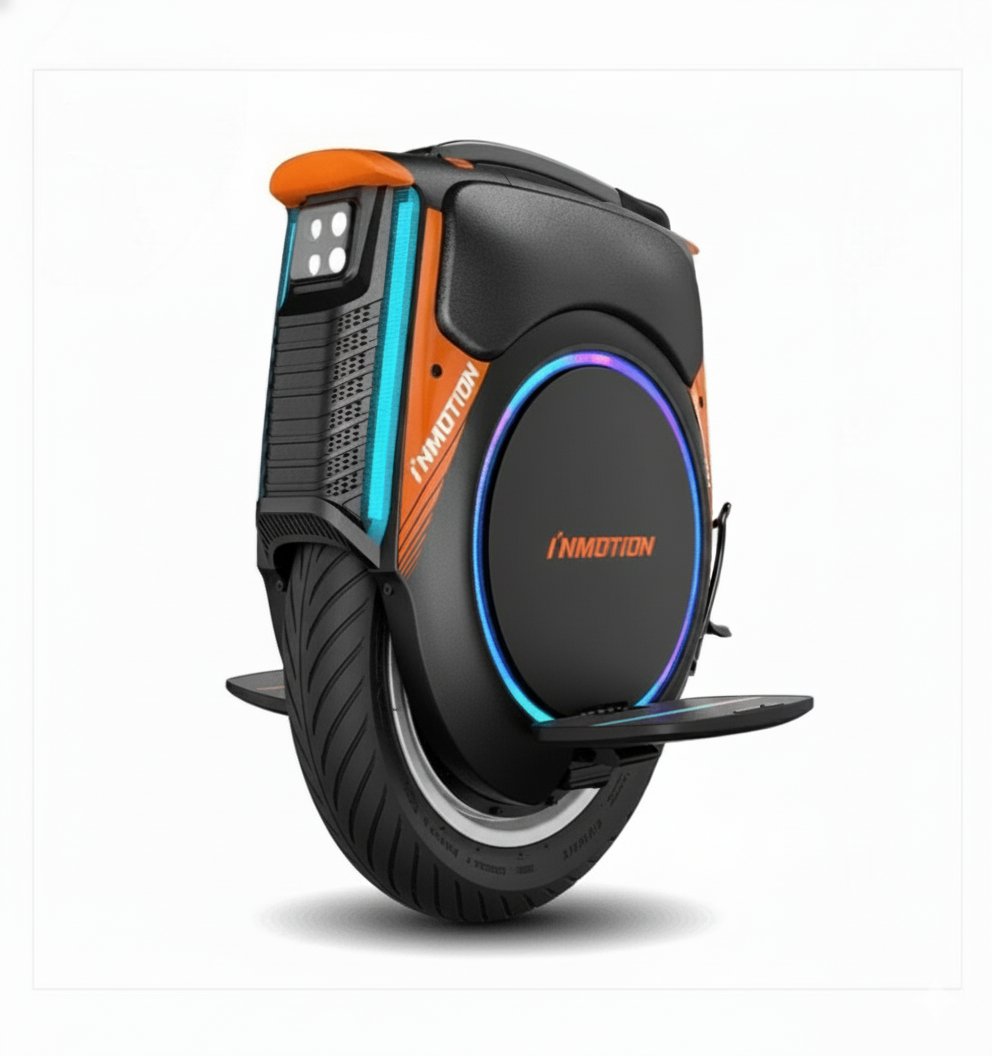
Pressure matters for three main reasons:
- Ride feel: Low pressure feels soft and can make the wheel feel unstable at speed.
- Grip: Pressure affects how the tyre meets the ground, especially on wet or loose surfaces.
- Tyre life: Running too low or too high wears the tread unevenly and shortens the tyre's life.
Check pressure before every ride, or at least once a week if you ride often.
What You Need Before You Start Checking Pressure
You do not need much to check your EUC's tyre pressure. You will need a pressure gauge, preferably a digital one, and a way to inflate the tyre if the reading is low.
Before you start, confirm three things:
- Your wheel model: Pressure recommendations differ between models, so find the exact recommended range in your manual or the manufacturer's listing.
- Your valve type: Check whether your tyre uses a standard valve that your gauge can fit. Some valves sit in awkward positions and need a short adapter.
- Your tyre condition: Look at the sidewall for cuts, bulges or embedded objects before you measure. Damage matters more than any pressure reading.
If your tyre has worn down or you are not sure it is the right size for your wheel, you may need a replacement. Our electric unicycle tyres are listed by wheel model, and you can send EUNI your wheel model and a photo of the tyre markings to help confirm the right option.

Finding the Right EUC Tyre Pressure by Rider Weight
The right pressure depends on the wheel model and on how much you weigh. Heavier riders usually need a higher pressure to keep the tyre from flexing too much, while lighter riders may prefer a softer feel for comfort.
Use these guidelines when you read your manual:
- Start at the middle of the recommended range for your weight.
- Ride for a short distance and note how the wheel feels.
- Adjust in small steps, usually 2 to 3 PSI at a time.
- Stay inside the manufacturer's minimum and maximum limits.
Finding your personal sweet spot takes a few rides. Many riders settle on a pressure that feels firm enough to handle well but soft enough to absorb bumps.
Checking Tyre Pressure Step by Step
On an electric unicycle, access to the valve can be the tricky part, since the valve position and wheel layout vary by model. The procedure below is designed to help you get a repeatable reading rather than a rough guess.
Before you measure: set the conditions
A useful reading depends on three things being consistent every time:
- Cold tyre. Measure before you ride, after the wheel has sat for at least an hour (ideally overnight). Riding warms the air and raises the reading, so a post-ride number is not comparable to your target.
- Same surface. Park on level, hard ground. A tyre pressed into grass or resting against a kerb distorts the reading.
- Same gauge. Different gauges can disagree by a few PSI. Pick one and use it as your reference so trends are meaningful.
Access the valve
- Stand the wheel upright and stable. Lean it against a wall or use a stand so it cannot roll. Do not lay it flat if that presses the tyre against the ground.
- Rotate the wheel to bring the valve to the most accessible point. On most models the valve is easiest to reach at the bottom or side, away from the frame and pedal hangers.
- Remove the valve cap and keep it safe. Caps are small and easy to lose; a spare in your tool kit is cheap insurance.
If the valve is recessed or angled awkwardly, a 90-degree or flexible valve extender lets you attach a gauge or pump head without bending the valve core. Check that your pump head clears the spokes and motor housing before you push it on; forcing a straight head onto an angled valve is how cores get bent and slow leaks start.
Take the reading
- Press the gauge straight onto the valve. A quick, firm push minimises air loss. If you hear a sustained hiss, reseat it; you are losing air and the reading will be low.
- Read and note the number in the unit your manual uses. Write it down with the date and temperature.
- Replace the valve cap immediately. It keeps grit and moisture out of the core.
Make it repeatable
The value of a check comes from comparing like with like. Take the reading the same way, at the same time of day, with the same gauge, and log it.
For model-specific fitment, see our electric unicycle tyres listings and check the option that matches your wheel.
Use this summary to see the main steps for checking your EUC tyre pressure at a glance.
| Step | What to do | Timing or frequency |
|---|---|---|
| Set conditions | Measure a cold tyre on level, hard ground | After wheel sits at least an hour, ideally overnight |
| Access valve | Stand wheel upright and rotate valve to most accessible point | Before each reading |
| Take reading | Press gauge straight onto valve and note the number | Record date and temperature |
| Replace cap | Refit the valve cap immediately | Every time after measuring |
How to Inflate an Electric Unicycle Tyre
If the reading is low, add air slowly in short bursts. Check the gauge after each burst until you reach your target pressure.

Here is the process:
- Attach the pump head to the valve and press it on firmly.
- Pump in short bursts, checking the gauge after each one.
- Stop when you reach the target pressure.
- Remove the pump and replace the valve cap.
If the tyre loses air quickly after inflating, it may have a leak or a faulty valve. Read the troubleshooting section below before you ride. Our electric unicycle inner tube listings include replacement tubes in various sizes, so confirm compatibility with your wheel before ordering.

Electric Unicycle Tyre Pressure in PSI and Bar
Most gauges show pressure in PSI (pounds per square inch) or bar. One bar is roughly 14.5 PSI, so a recommended pressure of 3.0 bar is about 43.5 PSI. Consistent monitoring ensures your ride remains stable and safe, so establish a reliable routine to check tire pressure before every outing.
Keep these tips in mind:
- Confirm the unit on your gauge before you read the number.
- Convert between PSI and bar if your manual uses the other unit.
- Stay within the manufacturer's stated limits in whichever unit they use.
Using the same unit every time makes it easier to spot changes. If you switch gauges, check the new one against your old reading to confirm they match.
Troubleshooting Low Pressure and Leaks
If your tyre keeps losing pressure, look for the cause before you ride.
Try these steps:
- Inflate the tyre to the recommended pressure and wait an hour.
- Check the pressure again. A small drop is normal, but a large drop suggests a leak.
- Listen and feel around the valve and tread for escaping air.
- Apply soapy water to the valve and tread. Bubbles show where air escapes.
Do not ride a tyre that loses pressure quickly. Repeated low-pressure rides can damage the tyre and affect handling.
If you are weighing up whether a new unicycle is the better option after repeated pressure problems, our guide Is Buying an Electric Unicycle in Australia Worth It? compares the costs and trade-offs.
Building a Pressure Check Routine for Your EUC
'Check it often' is not a routine. Pressure changes for predictable reasons: temperature, storage, riding heat, and slow leaks, so a useful schedule ties each check to the event that causes the change.
When to check, and why
- Before every ride. This is the only check that protects you directly. A tyre that was fine yesterday can be soft today after a cold night.
- After storage. A wheel left for weeks or months will lose some pressure and may flat-spot. Check and correct before the first ride back.
- After a big temperature swing. A drop of around 10°C can take a few PSI out of a tyre. If the season turns or the wheel moves from a warm room to a cold garage, re-check.
- After a rough ride or a kerb strike. Inspect the sidewall and valve for damage, then confirm pressure.
- Weekly, as a trend check. Log the reading so you can see whether pressure is stable or drifting down.
A simple log that does the work
You do not need an app. A note on your phone with four columns: date, ambient temperature, reading, and action taken, is enough. After a month you will know your tyre's normal loss rate, which makes any abnormal drop obvious.
Pair it with the rest of your pre-ride check
Pressure is one item on a short list. Check it alongside your brake feel, tyre condition, and charge level so the routine becomes one habit rather than several. Riders who commute daily will find the 7 Best Electric Unicycle Daily Commuting guide useful for how daily use affects upkeep.
Consistent, event-linked checks keep the tyre safe, the ride comfortable, and the wheel in good condition for longer.
Frequently Asked Questions
How do you check the tyre pressure on an electric unicycle?
Remove the valve cap, press a calibrated pressure gauge firmly onto the valve stem so no air escapes, and read the display or dial. Compare the reading with the recommended pressure range for your wheel and your body weight. Check the tyre when it is cold, ideally before the first ride of the day, because riding warms the air inside and raises the reading. Replace the valve cap afterwards to keep dust out of the valve.
What tool do you need to check electric unicycle tyre pressure?
A pressure gauge designed for the valve type on your wheel is the essential tool. A digital gauge is easier to read accurately and usually displays both PSI and bar. You will also need a pump to adjust the pressure, which can be a hand pump or a digital air pump. Confirm the valve type and tool compatibility before buying, as some gauges fit only certain valve shapes. EUNI can help you confirm which tools suit your wheel.
How does rider weight affect electric unicycle tyre pressure?
Heavier riders compress the tyre more, so a heavier rider generally needs a higher pressure within the manufacturer's range to keep the tyre supported and reduce the risk of pinch flats. Lighter riders can usually run slightly lower pressure for comfort and grip. Always stay inside the pressure range printed on the tyre sidewall or in your wheel's manual, and never exceed the maximum marked there.
Can an electric unicycle tyre look inflated but still have low pressure?
Yes. A tyre can look full while sitting below its recommended pressure, especially a larger tyre where the sidewall bulge is hard to judge by eye. Visual checks miss gradual pressure loss. Use a gauge rather than judging by feel or appearance, and recheck after a few days if you suspect a slow leak.
