

How to Charge an Electric Unicycle at Work Safely
Last Updated: November 4, 2026
Quick Summary
You can charge electric unicycle units at work during a 15km commute by plugging in on arrival and leaving the wheel charging through the morning. Check that your workplace allows it, use the charger made for your wheel, and unplug before the ride home. A partial top-up often covers the return leg.
- Ride your normal route once and note the charge left on arrival to learn your real range.
- Add a 20 to 30 percent safety margin to your round-trip distance for hills, wind and traffic.
- Ask your manager or building management for written approval before charging on site.
- Use only the charger supplied for your wheel and match its voltage to the battery pack.
- Arrive home with at least 20 percent battery remaining rather than riding to empty.
Table of Contents
- Can You Realistically Commute 15km on an Electric Unicycle?
- Working Out Your Range, Charge Time and Top-Up Plan
- Checking Your Workplace Charging Policy Before You Plug In
- Charging Safety Standards and Battery Care at Work
- Choosing the Right Charger and Charging Equipment
- A Step-by-Step Commute-and-Charge Routine
- Booking a Charger Check or Compatibility Advice with EUNI
- Frequently Asked Questions
Can You Realistically Commute 15km on an Electric Unicycle?
Yes, you can commute 15km on an electric unicycle, but only if you plan your charging. Most riders need to top up at work, because a single charge rarely covers a full round trip with margin to spare. For a 15km trip each way, the simplest fix is to charge electric unicycle at work between legs.
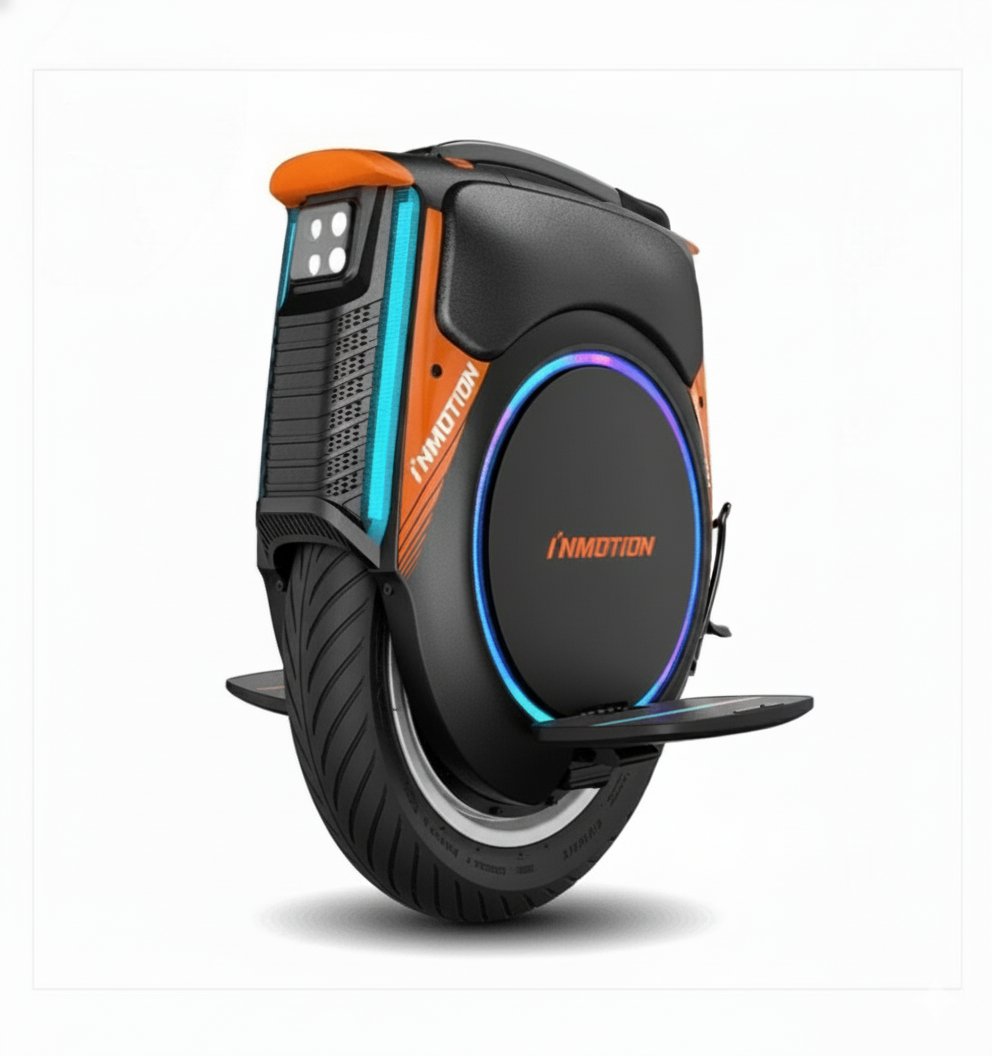
Electric unicycles are compact and quick, so they suit city commutes well. The catch is battery range. Hills, heavy loads, cold weather and fast riding all drain the battery faster.

Here is what makes a 15km commute work:
- Know your wheel's real range under your own riding conditions
- Charge at work to cover the return leg
- Keep a spare plan for days when the battery runs low
- Ride within your skill level on busy roads
Working Out Your Range, Charge Time and Top-Up Plan
Start with a simple question: how much battery do you actually use on one trip? Ride your normal route once, then note the charge percentage when you arrive. That real-world figure beats any spec sheet, because manufacturer range claims assume a light rider, warm weather, flat ground and a steady cruise.
Calculating realistic range for a round trip
Use a rough formula to plan your day:
- Round trip distance = 15km x 2 = 30km
- Add a safety margin of 20 to 30 percent for hills, wind and stop-start traffic
- Compare the result with your wheel's usable range, not its best-case figure
If your wheel's usable range is around 30km, a full round trip with no charge at work is tight. A workplace top-up gives you a comfortable buffer.
Several factors move that number more than riders expect:
- Rider weight and load, a heavier rider or a loaded backpack drains the battery faster on the same route.
- Speed, riding at 30km/h instead of 20km/h can cut range noticeably, because drag rises with speed.
- Terrain, sustained climbs use far more energy than flat commuting, and a hilly return leg is often the one that catches riders out.
- Temperature, cold mornings reduce usable capacity, so a winter commute may need a bigger top-up than the same trip in summer.
- Battery reserve, most wheels throttle or tilt back as the battery nears empty, so plan to arrive with at least 20 percent remaining rather than riding to zero.
How long a workplace top-up actually takes
Charge time depends on the charger's output and the battery's size. A partial top-up during a work day is often faster and more practical than waiting for a full charge.
To estimate your own top-up time, use this approach:
- Find your battery capacity in watt-hours (Wh) from your wheel's manual or spec sheet.
- Find your charger's output in watts (W) from its label.
- Divide capacity by output to get a rough full-charge time in hours, then scale it to the percentage you need.
Charging time is not provided in this article's verified information, so check your charger's label and your wheel's manual for the exact figures. Real-world times run longer because chargers taper current as the battery fills, so add a buffer.
A typical plan is to plug in on arrival, leave the wheel charging through the morning, and unplug before the ride home. Check your charger's label and your wheel's manual for the exact charge time, and remember that when you charge electric unicycle units quickly, the shorter window puts more heat into the battery.
Watch out: if your commute leaves you with little charge on arrival, a morning top-up may not finish before you leave, so check your charging window against your ride time.
The article's range and top-up points can be scanned quickly in the table below.
| Factor | Effect on range | Planning note |
|---|---|---|
| Rider weight and load | Heavier rider or load drains battery faster | Plan for the same route with your real load |
| Speed | Higher speed cuts range noticeably | Riding at 30km/h uses more than 20km/h |
| Terrain | Sustained climbs use far more energy | Hilly return legs often catch riders out |
| Temperature | Cold reduces usable capacity | Winter may need a bigger top-up |
| Battery reserve | Wheels throttle as battery nears empty | Arrive with at least 20 percent remaining |
| Safety margin | Covers hills, wind and stop-start traffic | Add 20 to 30 percent to round-trip distance |
Checking Your Workplace Charging Policy Before You Plug In
Before you charge at work, ask permission. Many workplaces have rules about charging personal devices, especially high-energy batteries.
Talk to your manager or building management and ask:
- Is charging personal electric vehicles allowed on site?
- Is there a designated area for charging?
- Are there rules about where batteries can be stored?
- Who should you contact if something goes wrong?
Getting a clear answer early protects you, your colleagues and the building. A written approval, even a short email, is a good idea.
Charging Safety Standards and Battery Care at Work
Charging safely matters. Lithium-ion batteries can overheat if they are damaged, overcharged or left unattended in a poor location.
OEM Charger for Electric Unicycle (Options for KS, Begode) →
Follow these basics every time:
- Use the charger supplied for your wheel, not a generic one
- Charge on a hard, clear surface away from walls, bags and paper
- Keep the area dry and cool, away from direct sunlight and heaters
- Never charge a damaged battery or one that feels hot or swollen
- Unplug once the charge is complete, rather than leaving it overnight
- Stay nearby while the wheel charges during the first few sessions
A common mistake is charging in a locked storeroom or under a desk with papers stacked nearby. Choose an open, ventilated spot instead. Watch out: charging a wheel in a locked or cluttered space means nobody can see or act if the battery overheats. Keeping the charging area visible and clear is only part of the precaution; following lithium charging requirements also helps reduce the risk of an unnoticed battery problem.
Choosing the Right Charger and Charging Equipment
The right charger matters as much as the right location. Chargers differ in voltage, current and connector, and using the wrong one can damage your wheel or create a safety hazard.

Matching voltage, current and connector
Before you buy or borrow a charger, confirm three things against your wheel's manual:
- Output voltage, the charger's voltage must match your wheel's battery pack. A 126V wheel needs a 126V charger; a lower-voltage unit will not charge it fully, and a higher one can stress the pack.
- Connector type, charging ports vary between models and even between revisions of the same model. Check the plug shape and pin layout, not just the brand.
- Current rating, the charger's current must be within what your wheel's battery management system supports. A higher-current charger shortens charge time but adds heat, and not every wheel is rated for it.
EUNI offers OEM charger options for several electric unicycle models. Each option has its own output voltage and charging current, so match the charger to your exact wheel before ordering. The OEM Charger for Electric Unicycle (Options for KS, Begode) page lists the options, with the standard listing priced at AUD $100.00.

If you are unsure which charger fits, the EUNI 126V smart charger offers adjustable current and a digital display, which many riders find easier to monitor at work. Confirm your wheel's voltage and connector first.
Standard versus fast charging
Do not choose a higher-current charger just to shorten charging time, confirm that your wheel supports it first, and follow the maker's specifications.
What to keep in your work charging kit
A small kit makes workplace charging predictable:
- The charger supplied for your wheel, labelled so a colleague does not unplug the wrong device
- A short extension lead rated for the charger's current, so you are not stretching a cable across a walkway
- A hard, non-flammable surface to rest the wheel and charger on
- A note of your wheel's voltage and connector type, in case you need a replacement
When choosing equipment, check:
- The output voltage matches your wheel's battery
- The connector fits your wheel's charging port
- The current rating is supported by your wheel
- The charger has a clear label you can read at a glance
Watch out: a charger that fits the plug but not the voltage is the most common compatibility mistake, always compare the label, not just the connector.
A Step-by-Step Commute-and-Charge Routine
Follow this routine to make workplace charging a habit:
- Check your battery before leaving home and note the charge level.
- Ride to work on your usual route, watching for hills and traffic.
- Plug in at work in your approved charging spot.
- Check the charge at lunch to confirm it is charging properly.
- Unplug before going home, and check the battery and charger for heat or damage.
- Ride home with enough buffer for traffic and weather.
- Store the wheel in a dry, cool place overnight.
Repeat this every day and you will quickly learn how much charge you actually need. Keep a simple note of your starting and finishing battery levels for the first week.
If you want extra protection while parked at work, the EUNI Parking Stand for Electric Unicycles gives your wheel a stable, roll-in, roll-out spot. Check that the stand fits your tyre size before ordering.
Booking a Charger Check or Compatibility Advice with EUNI
Not sure your charger matches your wheel, or your battery seems to drain too fast? Send us your wheel model, a photo of the charger label and a short description of the issue. We can help you confirm the right charger option and check for compatibility problems.
Enquire about electric unicycle repairs and servicing in Sydney with EUNI and get clear advice before you plug in.
Frequently Asked Questions
Is it safe to charge an electric unicycle at work?
It can be, provided you use the charger specified for your exact wheel, keep the wheel on a hard, non-flammable surface and never leave it charging unattended for long periods. Check the charger label for voltage and current, inspect the cable and connector for damage before each use, and avoid charging in blocked corridors or near exits. Stop charging if the battery or charger becomes unusually hot, swollen or smells unusual, and do not charge a wheel that has been damaged in a fall until it has been checked.
Do I need permission to charge my electric unicycle at the office?
Most workplaces need you to ask first, because building managers and employers set their own rules on personal electrical equipment and charging in shared spaces. Check your workplace's electrical and safety policy, and speak to facilities or your manager about where you can charge and for how long. Being clear about your plan, including the charger you will use and when you will be plugged in, makes approval far more likely.
How long does it take to charge an electric unicycle for a commute?
Charge time depends on battery capacity and the charger's output, so check the specifications for your model and the charger option you own. Check the specifications for your model and charger option to estimate charge time. Plan your top-up around the time you are at your desk.
Can I get an electric unicycle charger that matches my wheel?
Yes. EUNI stocks OEM charger options for several electric unicycle models, with different voltages, currents and connector types. Match the charger to your wheel's exact model, the output label on your current charger and the charging port before you order. If you are unsure, contact EUNI with photos of your charger label and the wheel's port, and we will help identify the right option.
