

How to Choose the Right Electric Unicycle Size
Last Updated: November 19, 2026
Quick Summary
Choosing the right electric unicycle size means matching rim diameter, tyre width and wheel geometry to your height, weight and terrain. Compact wheels suit beginners and short commutes, mid-size wheels balance stability and portability, and large wheels handle off-road and high speed.
- Measure your inseam and compare it to pedal height, not rim diameter alone.
- A standard non-suspension wheel is the conventional beginner recommendation.
- Larger wheels roll over obstacles better but are harder to carry and slower to turn.
- Heavier riders need higher tyre pressure and more suspension spring support.
- Check footplate length and width, since large feet on a narrow footplate lose stability.
Table of Contents
- Why Electric Unicycle Size Decides How a Wheel Rides
- Electric Unicycle Size Comparison Table
- Wheel Size vs Terrain: Urban Commuting, Off-Road and Everything Between
- The Learning Curve for Beginners and Which Size Helps Most
- Distance, Range and Performance Differences by Wheel Size
- Portability and Weight Trade-Offs
- Long-Term Ownership Costs and Legal Implications
- Get Matched to the Right Electric Unicycle at EUNI
- Frequently Asked Questions
Why Electric Unicycle Size Decides How a Wheel Rides
Selecting the correct electric unicycle size is the primary decision that shapes your riding experience: how the wheel accelerates, brakes, feels underfoot on rough footpaths, and how easily you can carry it. At EUNI, we assist riders in finding suitable wheels by focusing on the relationship between wheel geometry and rider physiology.
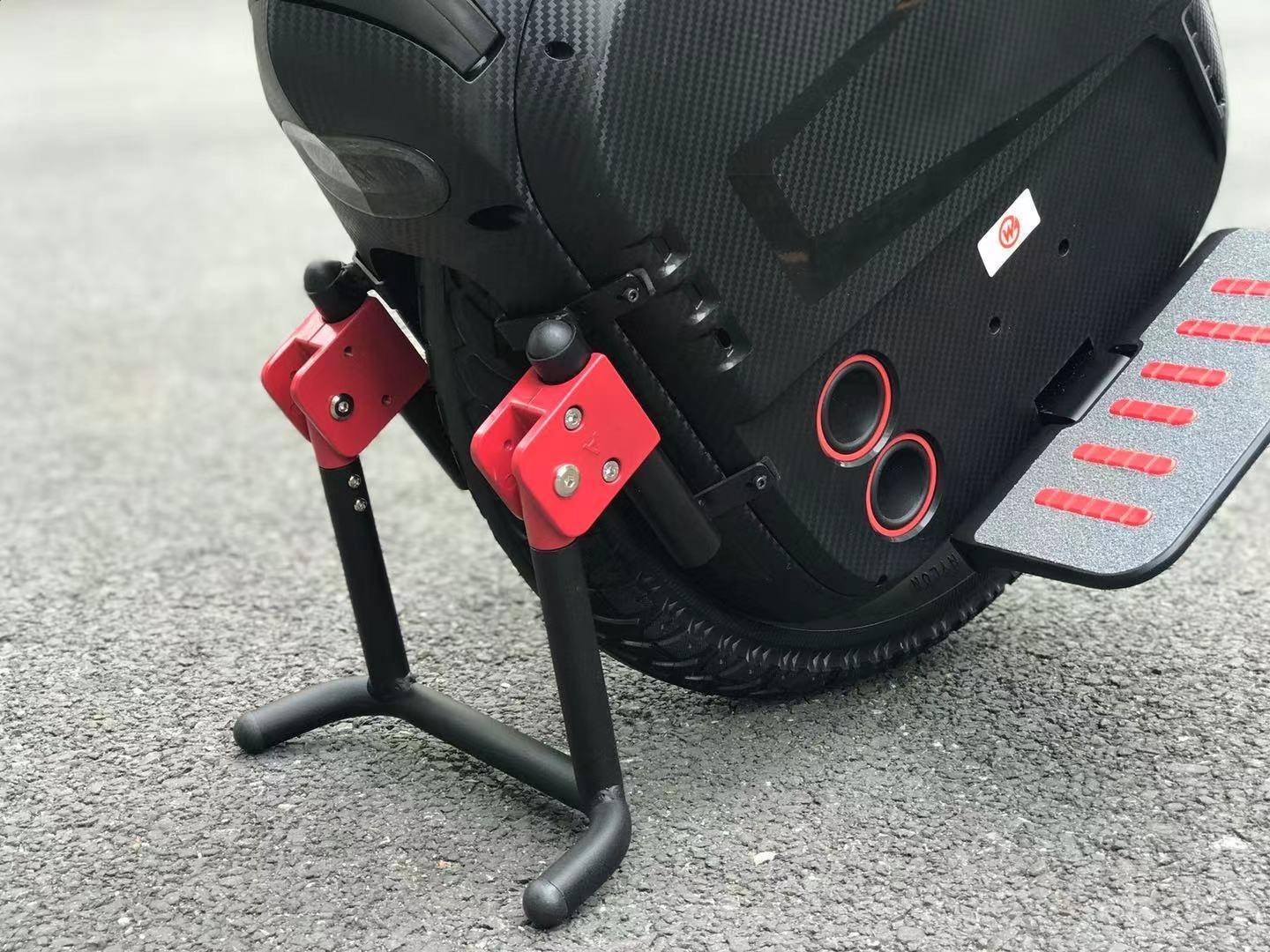
Electric unicycle size is the combination of rim diameter, tyre width and overall wheel geometry that determines how a wheel transfers force, absorbs terrain and responds to rider input. Two wheels with identical motors can feel completely different because their diameters differ.
The physics of wheel diameter
A larger wheel rolls over obstacles more easily and holds momentum better. A smaller wheel accelerates faster and turns tighter. The gyroscopic effect strengthens with diameter and speed, which is why big wheels feel planted at pace and sluggish at walking speed.
Centre of gravity sits higher on a large wheel, so lean inputs translate into slower, more deliberate direction changes. This is a benefit on open roads but a hindrance in crowded pedestrian areas.
How rider height and weight change the equation
Rider height affects where your centre of gravity sits relative to the wheel axle. Taller riders naturally stand higher and can use a larger diameter without feeling top-heavy.
Weight matters for spring rates on suspension models and for tyre pressure on every model. A heavier rider needs more air pressure to avoid pinch flats and more spring support to prevent bottom-outs.
Electric Unicycle Size Comparison Table
Use this table to shortlist by category before you look at individual models. Sizes below refer to the wheel class rather than a single specification.
| Wheel Class | Typical Rim Size | Best For | Rider Fit (inseam / weight) | Strengths | Trade-offs |
|---|---|---|---|---|---|
| Compact | 14-16 inch | First wheel, short commutes, mixed transport | Inseam under 76 cm; rider under 80 kg | Light, easy to carry, quick to learn | Less stable at speed, harsher over rough ground |
| Mid-size | 16-18 inch | Daily commuting, longer distances | Inseam 76-84 cm; rider 70-100 kg | Balance of stability and portability | Heavier to lift, slower to turn |
| Large | 19-22 inch | Off-road, touring, high speed | Inseam over 84 cm; rider over 90 kg | Rolls over obstacles, planted at pace | Hard to carry, slow to manoeuvre in crowds |
Typical Rim Size
Matching rider dimensions to wheel diameter
The ratio that matters most is pedal height to inseam. Weight interacts with diameter through spring rate and tyre volume. Footplate length is the third dimension. A rider with large feet on a narrow footplate loses stability regardless of wheel diameter, because the contact patch under the foot is smaller than the foot itself.
Wheel Size vs Terrain: Urban Commuting, Off-Road and Everything Between
Terrain dictates size requirements significantly. Smooth city footpaths and bike lanes reward a mid-size wheel with moderate rolling resistance and predictable braking distance. Loose gravel, grass and tree roots demand a larger diameter, a knobby tread pattern and generous ground clearance.
Tyre profile does the quiet work here. A rounded profile with a shallow tread pattern turns smoothly on sealed surfaces. A flatter profile with deeper tread and a wider contact patch grips loose ground but adds rolling resistance on pavement.
If your riding is mostly a daily commute, our guide to the 7 best electric unicycles for daily commuting compares real-world range, weight and suspension across models. Riders heading off sealed surfaces should read the best electric unicycle for off road riding guide, which covers suspension travel, knobby tyres and beginner-friendly options.
Tyre profile, tread pattern and ground clearance
Ground clearance determines what you can ride over without striking the pedal or shell. Pedal height and shell geometry vary between models even within the same wheel class, so check both figures rather than diameter alone.
The Learning Curve for Beginners and Which Size Helps Most
Beginners learn fastest on a compact, forgiving wheel with a low centre of gravity and predictable torque delivery. A non-suspension model is the conventional recommendation for those just starting out.
At EUNI, we encourage new riders to start on a non-suspension wheel. The responsive feel helps riders build solid riding skills before adding suspension into the mix. Weight and balance matter as much as diameter. A rider who struggles to lift a wheel will avoid using it, and a wheel that feels unstable for your build undermines confidence.
Distance, Range and Performance Differences by Wheel Size
Range comes from battery capacity, but wheel size changes how efficiently that capacity is used. Larger diameters generally have lower rolling resistance on smooth ground and hold speed with less motor effort. According to industry data on electric mobility efficiency, wheel diameter and tyre pressure are critical variables in energy consumption.
Performance splits into two distinct measures. Top speed favours diameter and motor headroom. Acceleration and incline climbing favour torque at the rim, which compact wheels deliver well.
Portability and Weight Trade-Offs
Portability is where the size decision becomes physical. A compact wheel lifts into a car boot, onto a train and up stairs without strain. A large wheel with a big battery becomes a two-handed lift and a storage problem. Weight distribution matters as much as total weight. A wheel that balances well when carried by the handle feels lighter than its specification suggests.
Long-Term Ownership Costs and Legal Implications
Ownership costs extend well beyond the purchase price. Tyres wear, pads compress, and suspension components need servicing, but the rate at which each happens scales with diameter and the terrain you ride. A larger diameter covers more ground per revolution, so the tyre contacts the road less often per kilometre travelled.
How wheel size affects classification and where you can ride
Rules on where electric unicycles may be ridden can differ between states and territories. Check the current rules with your state transport authority before commuting. According to Australian transport regulation guidelines, local council and state laws dictate the legality of personal mobility devices on public infrastructure. Always confirm the maximum permitted speed where you intend to ride and any helmet requirements before you buy.
For a full breakdown of what different models include at each price point, read our guide to what electric unicycles cost in Australia.
Get Matched to the Right Electric Unicycle at EUNI
There is no single best electric unicycle size, only the right one for each rider. At EUNI, we work directly with manufacturers on design, servicing and each model's strengths and limitations. Speak with the EUNI team about your options before you commit. Get started with EUNI and ride away on a wheel matched to your terrain, your build and your budget.
Frequently Asked Questions
Does a larger wheel size make an electric unicycle more stable?
Yes, generally. A larger wheel diameter raises the gyroscopic effect and moves the centre of gravity higher, which smooths out small bumps and makes the wheel track straighter at speed. That stability helps on open roads and longer commutes. The trade-off is weight and a slower turning radius, so a big wheel feels less agile in tight spaces. A smaller wheel responds faster to steering input but transmits more vibration from rough surfaces.
Are smaller electric unicycle wheels better for beginners?
Smaller wheels are often easier to learn on because they are lighter, lower to the ground and easier to step off when balance goes wrong. At EUNI, we match the wheel to your height, weight and terrain rather than assuming one size fits all.
How does wheel diameter affect electric unicycle range and speed?
Wheel diameter itself does not set range or top speed, but it changes how efficiently the motor delivers power. Larger wheels roll with lower resistance per rotation and handle higher top speeds with less vibration, which suits longer commutes. Smaller wheels spin faster for the same speed, which can increase rolling resistance and heat. Battery capacity, motor power and rider weight still decide the real numbers. Check the battery figure, not just the wheel size, when comparing range.
What is the best wheel size for commuting on uneven surfaces?
A wheel with a wider tyre and good tread pattern handles uneven footpaths, tram tracks and mixed surfaces well. The larger diameter absorbs bumps better than a compact wheel, and the wider contact patch improves grip. If your commute includes gravel or broken pavement, a suspension wheel with more travel makes a bigger difference than diameter alone.
Do I need a different wheel size for off-road riding compared to city streets?
Off-road riding rewards a larger wheel with more ground clearance, a knobbier tread pattern and longer suspension travel. A larger wheel rolls over roots and rocks more predictably than a compact wheel, and the extra clearance stops the pedals scraping on ruts. City riding favours a lighter, more manoeuvrable wheel that handles tight turns and kerbs. If you ride both, a mid-size suspension wheel is the usual compromise.
How do I know which electric unicycle size suits my height and weight?
Start with your weight including gear, because it affects how much spring support and motor torque you need. A heavier rider on an undersprung wheel will bottom out the suspension and stress the motor on inclines. Height matters for footplate size and pedal height, which affect comfort and control on longer rides. At EUNI, we ask about your weight, height, riding terrain and load before recommending a model, so the wheel fits you rather than just the spec sheet.
